

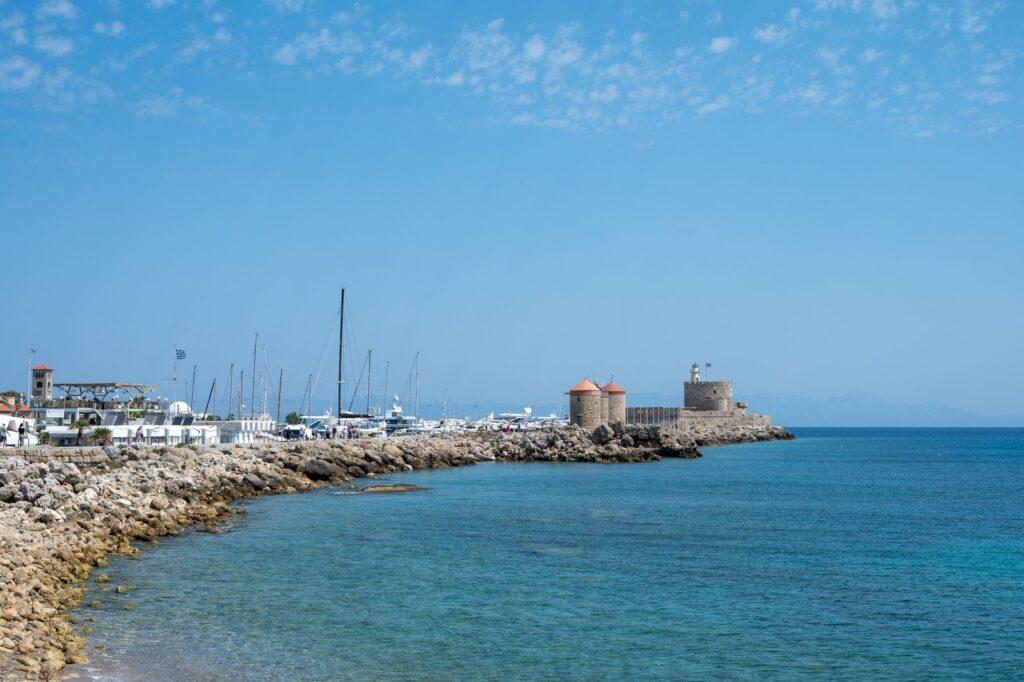
Greece taxes the foreign income of people who move their tax residence there at a fixed €100,000 a year, whatever that income is, for up to 15 tax years. Since the UK replaced the remittance basis with a 4-year regime on 6 April 2025, UK readers have asked what the Greek regime requires. This guide sets out the rules as they stand, with their legal status.
Last checked: November 2026
At a glance
- The rule: Article 5A of the Income Tax Code (Law 4172/2013). In force.
- The tax: €100,000 a year on all foreign-source income, plus €20,000 a year for each relative added.
- Who can apply: people who move their tax residence to Greece and were not Greek tax residents in 7 of the previous 8 years.
- Investment: at least €500,000 in Greek property, businesses, securities or shares, completed within three years of applying.
- Duration: up to 15 tax years, with no extension.
- Deadline: 30 September of the year of arrival or of the following tax year, under AADE decision A.1147/2026.
- Not covered: Greek-source income, such as Greek rent, which is taxed under the general rules.
The UK change behind the question
On 6 April 2025 the 4-year foreign income and gains (FIG) regime replaced the remittance basis, according to HMRC guidance on GOV.UK. Under the FIG regime, eligible foreign income and gains are not taxed in the UK.
The FIG regime is narrower than the old remittance basis. It applies only in the first four tax years of UK tax residence, after at least ten tax years of non-UK residence, GOV.UK says. UK residence is decided under the statutory residence test. Unused years cannot be carried forward.
Greece’s regime works on a different basis. It does not exempt foreign income. It replaces the tax on it with one fixed annual amount.
How the €100,000 regime works
Article 5A of the Income Tax Code lets a person who moves their tax residence to Greece choose this regime for income that arises outside Greece. The Greek tax authority (AADE) set out the procedure in decision A.1147/2026 (Government Gazette B’ 4431/20.07.2026).
- Fixed tax. €100,000 for each tax year, whatever the amount of foreign income.
- Relatives. The regime can be extended to a spouse or to relatives in the direct line, at €20,000 a year each. This can be asked for in the first application or later.
- Payment. In one instalment by the last working day of December of each tax year. No instalments, and no set-off against other tax.
- Foreign tax. Tax paid abroad on the covered income cannot be credited against the Greek amount.
- Returns. No Greek return is needed for the foreign income covered by the regime.
- Inheritance and gifts. Paying the tax also exempts the person from Greek inheritance and gift tax on movable property located abroad.
Greek tax residence itself is set by Article 4 of the Income Tax Code. A person is a Greek tax resident if their permanent or main home, habitual residence or centre of vital interests is in Greece. A person present in Greece for more than 183 days in any 12-month period is also a tax resident, from the first day in the country.
Who can apply
Article 5A sets two conditions.
- Prior residence. The applicant must not have been a Greek tax resident in 7 of the 8 years before the move. AADE checks its own records. Where they do not show residence abroad, the applicant supplies a foreign tax residence certificate, a foreign tax assessment or return, or another official certificate for each year.
- Investment. The applicant must invest at least €500,000 in Greece, personally, through a spouse or direct-line relative, or through a company in which the applicant holds the majority. The investment must be completed within three years of the date of the application.
Article 5A waives the investment for holders of an investor residence permit issued under Article 16 of Law 4251/2014, the earlier migration code.
Does property count?
Yes. AADE decision A.1147/2026 lists real estate (“akinita”) among the qualifying investments, next to businesses, transferable securities and shares in legal persons based in Greece.
The applicant must show that the investment amount was transferred to an account at a Greek credit institution. Once the investment is complete, the applicant asks AADE to confirm completion within six months.
If the investment is not completed within three years, the regime is revoked from the first year of inclusion. Worldwide income is then taxed under the general rules, and the tax on foreign income for those years cannot be less than €100,000 a year, after deducting the fixed tax already paid.
Deadlines and procedure
Law 5313/2026 (Article 94) removed the fixed 31 March application date from Article 5A and moved payment from July to December. It gave AADE the power to set deadlines. Article 94 has applied since 25 June 2026, according to decision A.1147/2026.
- Choose the year. A person who moved to Greece by 2 July can apply for the year of arrival or the following year. A person who moved after 2 July applies for the following year.
- Apply by 30 September of the year of arrival or of the following tax year. Applications go to the competent section of the tax procedures and service centre (KE.FO.DE.) of Attica or of Thessaloniki. They can be sent online through the myAADE application “My Requests” (Ta Aitimata mou), by registered post or courier, or in person.
- Send documents. An application is accepted without supporting documents. They can be supplied until 31 October of the same tax year. Foreign documents need an apostille or consular certification, as applicable, and a translation where required.
- Decision. AADE decides within 60 days, and no later than the last working day of November. Approval comes with the first tax assessment.
- Pay by the last working day of December, each year.
The regime can be left in any year by a withdrawal request filed by 30 September of that year. From then on the general rules apply.
What it does not cover
The fixed tax covers foreign-source income only. Income that arises in Greece is declared and taxed under the general rules, through the normal annual return (Article 67 of the Income Tax Code). For a property buyer, this means rent from a Greek home is outside the €100,000. So are Greek property taxes such as ENFIA and transfer tax, which are separate taxes.
Who it suits: the arithmetic
The amount is fixed, so its weight depends on the size of the foreign income. The table divides €100,000 by different levels of annual foreign income.
| Annual foreign income (€) | Fixed tax (€) | Fixed tax as share of that income |
|---|---|---|
| 250,000 | 100,000 | 40% |
| 500,000 | 100,000 | 20% |
| 1,000,000 | 100,000 | 10% |
| 5,000,000 | 100,000 | 2% |
For an applicant who adds a spouse, the yearly amount is €120,000 (€100,000 plus €20,000). Over the full 15 tax years, that is €1.8 million, on top of the €500,000 investment. These figures exclude any Greek tax on Greek-source income.
The entry cost is set by the law: a €500,000 investment and at least €100,000 a year, whatever the foreign income. Greece has two other regimes with different conditions, for foreign pensioners and for people who move to work, set out below.
Other Greek regimes for new residents
These are separate regimes with their own conditions. A person cannot be under the 7% regime and the €100,000 regime at the same time, according to AADE decision A.1192/2026.
| Regime | What it gives | Main condition | Duration (tax years) | Status |
|---|---|---|---|---|
| Article 5A | €100,000 a year on all foreign income; €20,000 per relative | Not Greek resident in 7 of previous 8 years; €500,000 investment | Up to 15 | In force |
| Article 5B, foreign pensioners | 7% a year on all foreign-source income | Foreign pension; not Greek resident in 5 of previous 6 years; move from a country with a tax cooperation agreement in force with Greece | Up to 15 | In force |
| Article 5C (5Γ in Greek) | 50% of Greek employment or business income exempt from income tax | Not Greek resident in 5 of previous 6 years; work in Greece or start a business there; declare a stay of at least two years | 7 | In force |
For the 7% regime, AADE decision A.1192/2026 (Government Gazette B’ 5767/24.09.2026) sets the application deadline at 31 October of the year of arrival or of the following tax year. The tax is paid by the last working day of December, in one instalment. Our 7% flat tax guide covers it in detail. The 50% regime is in Article 5C.
The 15% transfer tax bill and Greek tax residence
A separate bill would raise transfer tax on home purchases by some buyers to 15%. It is a bill tabled in Parliament on 3 November 2026, not yet law. Public consultation ran from 18 October to 1 November 2026, and the bill is now before the Hellenic Parliament. Today the buyer pays 3% plus a 3% municipal surcharge on the tax, 3.09% in total.
Article 16 of the tabled bill applies the 15% rate when a home is bought by a natural person who, at the time the tax liability arises, is tax resident in a country outside the EU and the European Economic Area (EEA). The test is tax residence, not nationality. The United Kingdom is outside both. It does not apply to buyers who qualify for the first-home exemption in Article 42 of the Property Tax Code. Under Article 52(8), the rate would apply to final contracts drawn up from 1 July 2027.
On that wording, a buyer who is already a Greek tax resident when the tax liability arises would not be a non-EU/EEA tax resident. The bill does not mention Article 5A or say how tax residence is proved at the time of purchase. The order of events, and the treatment of a buyer who has just moved, are open points in the bill’s text. Our report on the bill and our cost comparison go through the figures.
Frequently asked questions
How much is Greece’s flat tax for new residents?
€100,000 a year on all foreign-source income, whatever its amount, plus €20,000 a year for each relative added, under Article 5A of the Income Tax Code.
Can buying property in Greece count as the €500,000 investment?
Yes. AADE decision A.1147/2026 lists real estate among the qualifying investments. The €500,000 must be invested within three years of the application.
What is the application deadline?
30 September of the year of arrival or of the following tax year, under AADE decision A.1147/2026. A person who moved after 2 July applies for the following year.
Is Greek rental income covered by the €100,000?
No. Greek-source income, including rent from Greek property, is declared and taxed under the general rules.
Did the UK non-dom regime end?
The remittance basis was replaced by the 4-year foreign income and gains regime on 6 April 2025, according to GOV.UK.
Sources
- Income Tax Code, Law 4172/2013, Article 5A (as amended by Law 5222/2025 and Law 5313/2026)
- Income Tax Code, Article 4: tax residence
- Income Tax Code, Article 5C: 50% exemption
- Law 5313/2026, Article 94: amendments to Articles 5A and 5B
- AADE decision A.1147/2026, Government Gazette B’ 4431/20.07.2026 (PDF)
- AADE decision A.1192/2026, Government Gazette B’ 5767/24.09.2026 (PDF)
- Hellenic Parliament: text of the bill tabled on 3 November 2026, Article 16 (15% transfer tax) and Article 52 (start dates) (Greek)
- Hellenic Parliament: bill “Strengthening disposable income, savings and investment”, tabled 3 November 2026
- GOV.UK: Remittance basis changes
- GOV.UK: Check if you can claim the 4-year foreign income and gains regime
More on moving: Moving to Greece from the UK, the non-dom regime and Athens Riviera prices and the Golden Visa hub.
Buyers should confirm how this applies to them with a Greek lawyer or accountant.