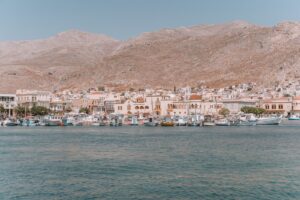

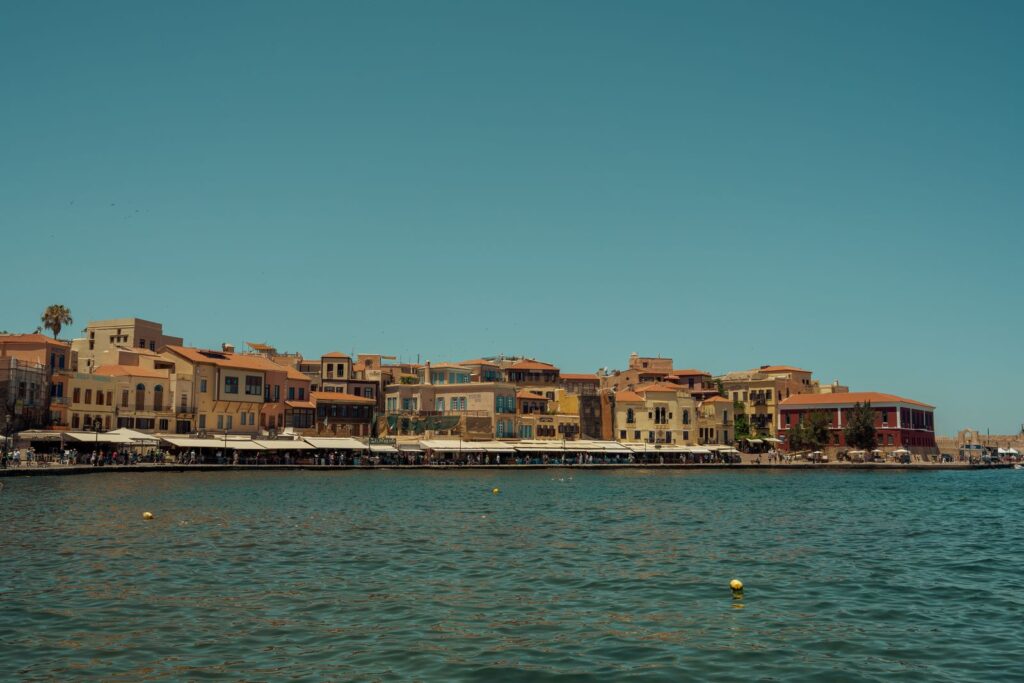
Living in Crete suits foreigners who want island life without a winter shutdown. Greece’s largest island has 624,408 residents, two international airports, a university hospital and four main towns: Chania, Rethymno, Heraklion and Agios Nikolaos. This expat guide compares those towns, explains healthcare and winter life, and sets out asking prices from Spitogatos Q2 2026 data, the only price source used here.
Last checked: October 2026
At a glance
- Crete’s average asking price was €2,250 per m² in Q2 2026, up 6.9% year on year and 50% since Q2 2021, according to Spitogatos.
- Chania is the most expensive part of Crete, at €3,102 per m²; Lasithi, which includes Agios Nikolaos and Elounda, averages €1,944.
- The University General Hospital of Heraklion (PAGNI) is the island’s main referral hospital.
- Heraklion and Chania airports have flights all year; a new airport at Kastelli is under construction.
- Crete has more than 3,100 residents, so the Golden Visa minimum is €800,000 anywhere on the island.
Where to live in Crete: the four main towns
Most Crete expats live in or near one of four towns along the north coast. Each offers a different balance of price, pace and services.
| Town | Population 2021 (municipality) | Regional unit asking price, Q2 2026 | Airport | Character |
|---|---|---|---|---|
| Chania | 111,375 | €3,102/m² | Chania (international) | Old harbour town, largest expat community |
| Rethymno | 57,216 | €2,202/m² | Between Chania and Heraklion | Smaller university town |
| Heraklion | 179,302 | €2,200/m² | Heraklion (international) | Capital and largest city; main hospital |
| Agios Nikolaos and Elounda | 27,785 | Lasithi €1,944/m² | Heraklion is nearest | Lake town and the island’s luxury coast |
Sources: ELSTAT 2021 census; Spitogatos islands release, Q2 2026. Prices are averages for each regional unit, not for the town alone.
Chania
Chania is the first choice for many foreign buyers. It has a Venetian harbour, a walkable old town and the largest established foreign community on the island. Spitogatos placed the Chania regional unit fifth among all Greek areas for asking prices in Q2 2026, at €3,102 per m². It also lists Chania among the island areas foreigners target most.
The coast west of Chania and the Akrotiri peninsula near the airport are popular with expats. Villages inland are cheaper but need a car.
Rethymno
Rethymno is smaller and quieter, with a Venetian old town and a long sandy beach. The University of Crete has a campus here, which keeps the town lively in winter. The Rethymno regional unit averaged €2,202 per m². Rents for small student homes in Rethymno averaged €13.2 per m² a month, according to Spitogatos’ student-housing data; that is a student figure, not a general rent.
Heraklion
Heraklion is Crete’s capital and its working city. It has the largest airport, the main hospital, the port to Piraeus and most public services. The Heraklion regional unit averaged €2,200 per m², slightly below Rethymno. Heraklion is less picturesque than Chania, but daily life is the most practical.
Agios Nikolaos and Elounda
Agios Nikolaos is a small harbour town built around a lake in eastern Crete. Nearby Elounda is the best-known and most expensive luxury area of Crete, with high-end villas and resort hotels on the Mirabello Gulf.
The Lasithi regional unit averaged €1,944 per m², the lowest of Crete’s four units. That average covers inland villages and the east of the island; Spitogatos does not publish a separate Elounda figure, and luxury villas there sit far above it. Winters in Elounda are very quiet, as many hotels and restaurants close.
Healthcare in Crete
Crete has the strongest hospital network of any Greek island. The University General Hospital of Heraklion (PAGNI), at Voutes on the edge of Heraklion, is a university hospital and the main referral centre for the island.
Heraklion also has the Venizeleio General Hospital. Chania, Rethymno and Agios Nikolaos each have a general hospital, and health centres serve rural areas. Many residents also use private clinics, mostly in Heraklion and Chania.
To use the public system as a resident, you need a social security number (AMKA). EU residents and those paying Greek social insurance can register; others usually rely on private health insurance, which is also a residence permit condition for many non-EU routes.
Airports and getting around
Crete has two international airports with flights all year: Heraklion (Nikos Kazantzakis) and Chania. Winter flights are mostly to Athens, with fewer direct international routes than in summer.
A new international airport is under construction at Kastelli, south-east of Heraklion. It is meant to replace the current Heraklion airport. The Northern Road Axis of Crete (VOAK) along the north coast is also being upgraded in stages.
Daily ferries link Heraklion and Chania (Souda) with Piraeus. A car is close to essential outside the town centres, as buses are limited in rural areas.
Living in Crete in winter, and retiring there
Crete stays busy in winter because its economy does not rest on tourism alone. Farming, universities, regional government and the hospitals keep the main towns open all year.
Winters on the north coast are mild, but rain and wind are common from November to March. Snow falls on the mountains, not usually in the coastal towns. Heating and good insulation matter more than many buyers expect. Storms can also cause damage: Crete was hit by a storm on 1–4 October 2026.
Social life changes with the seasons. In the towns, cafés, markets and cultural events continue through winter. In small coastal villages that live on tourism, many neighbours leave or close up, and winter can feel isolating.
For anyone planning to retire in Crete, Heraklion and Chania are the practical choices because of hospital and airport access. Foreign pensioners who become Greek tax residents can apply for the 7% flat tax on foreign income; see our guide to Greece’s 7% flat tax for pensioners and the wider retire in Greece guide.
Buying in Crete: rules and costs
Foreign buyers in Crete follow the same rules as elsewhere in Greece. You need a Greek tax number (AFM), usually a lawyer to check title, and a licensed engineer to check planning status and issue the electronic property identity (ilektroniki taftotita akinitou).
- Transfer tax. Resales pay 3% transfer tax plus a 3% municipal surcharge on the tax, giving 3.09%. A government bill tabled in Parliament on 3 November 2026 would raise transfer tax to 15% when a natural person who is a tax resident outside the EU and EEA buys a home, for final contracts signed from 1 July 2027 (article 16). It has not been voted and is not law (see the transfer tax bill).
- Golden Visa. Crete has more than 3,100 residents, so the minimum is €800,000 in a single property of at least 120 m². The €250,000 route for conversions and listed-building restorations also applies.
- Agent fees. Estate agent and buyer’s agent fees are agreed case by case.
- Illegal works. Rural Cretan homes often have unpermitted extensions. Check them before signing; see our guide to illegal building works.
Our Crete area guide and cost of buying property in Greece set out the numbers in more detail.
Steps to move to Crete
- Rent for a season. Live in your chosen town through a winter before you buy.
- Get an AFM and a bank account. Both are needed to rent long term, buy and pay bills. See our guide to the AFM and a Greek bank account.
- Sort your residence status. EU citizens register their residence; non-EU citizens need a permit before moving.
- Arrange health cover. Register for an AMKA if you are entitled, or take out private insurance.
- Buy with checks. Use a lawyer to check title and Cadastre records, and a licensed engineer to check permits and planning status, before any deposit.
Thinking about buying in Crete? Give your brief to an independent buyer’s agency. It can search the market for exactly what you are looking for and advise you through the purchase.
Frequently asked questions
Is Crete a good place to live for expats?
Yes, for most expats who want island life all year. Crete has two international airports, a university hospital and large towns that stay open in winter.
Where do most expats live in Crete?
Chania and its surrounding coast have the largest foreign community. Rethymno, Heraklion and Agios Nikolaos also have expat residents.
How much does a home in Crete cost?
The average asking price was €2,250 per m² in Q2 2026, according to Spitogatos. Chania averaged €3,102 per m² and Lasithi €1,944.
Is Crete good to retire to?
It can be, if you live near Heraklion or Chania. Both have hospitals and airports, and the University General Hospital of Heraklion handles specialist care.
What is the most expensive area of Crete?
Elounda is the best-known luxury area. Among regional units, Chania has the highest average asking price.
What is the Golden Visa minimum in Crete?
€800,000, because Crete has more than 3,100 residents. Conversions and listed-building restorations qualify from €250,000.
Buyers should confirm how this applies to them with a Greek lawyer or accountant.
Sources
- Spitogatos: Greek islands, Q2 2026 (16 September 2026)
- Spitogatos: Sales and rents of homes, Q2 2026 (4 August 2026)
- Spitogatos: Student housing, Q2 2026 (1 September 2026)
- ELSTAT: 2021 Census, resident population by municipality
- University General Hospital of Heraklion
- Law 5100/2024, Article 64: Golden Visa investment thresholds